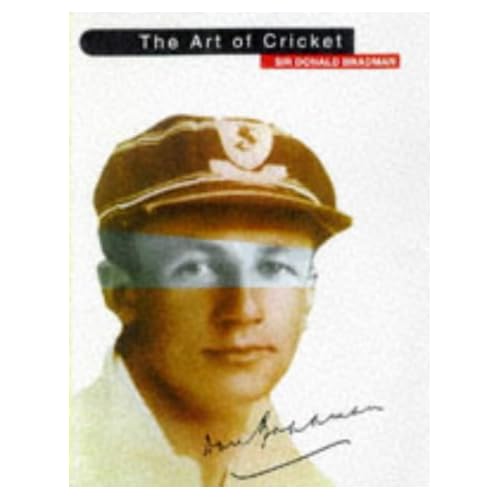
By Sir Donald Bradman
Hodder and Stoughton
The history of the evolution of cricketing skills, however, is not the reason for which these books were written in the first place - aiding the budding young cricketer in his quest for cricketing excellence being the obvious one. However, in spite of the undoubted credentials of most of those who wrote all these books, one does have to keep in mind the uniqueness of style of each individual player which may and does often appear to be at variance to the strictly orthodox. Moreover, reading more than one coaching book could, therefore, mean getting slightly mixed messages. Thus the choice of a cricket coaching book for the primary reason to learn can be a tricky one. The MCC Cricket Coaching Book in its many avatars does present a good option since it stays away, by and large, from personalities and individuals. Nevertheless, if I was to select one cricket book as the best on the subject my unhesitating vote would go to the work of a cricketer whose own style did not satisfy the purist in his own playing days - in fact, far from it.
Sir Donald Bradman had a dominant bottom hand in his stroke play which runs counter to the basic tenets of bating orthodoxy. In addition, and stemming from it in fact, was his tendency to play the horizontal bat strokes to deliveries that others would meet with a perpendicular blade. However this does not take away from the fantastic value of his book as a coaching manual.
Bradman's The Art of Cricket overcomes the finicky objections of the ultra-orthodox (yours truly included) by the sheer depth and breadth of his coverage of cricketing techniques. From the selection of equipment, to the technical aspects of the game - batting, bowling, fielding, keeping - to captaincy, coaching, selector-ship and umpiring right up to the need to relax with other sports, the Don leaves you completely satisfied with the detail and his wonderful insight. By dealing with further specifics like the art of placing the ball and how to deal with off spinners in particular, temperament and sportsmanship, he makes it a must have and a must read not just for those wanting to take up serious cricket but those already involved in it.
While the Don uses action strips from his own batting to illustrate various strokes, he does not fail to mention how he differs from the strictly orthodox and provides his own justification for it. This is important for it gives the reader the proper perspective and the option to chose one or the other (or a compromise) with the full knowledge of what it entails.
What I found most fascinating about this book was that though primarily a batsman (although his leg breaks got him 36 first class wickets including Wally Hammond in a Test match) his knowledge of the nuances of bowling are second to none. Finally the ultimate bonus from this book is one long chapter on seam and swing bowling where he explains in great technical detail why and how a cricket ball moves in the air. I have not come across a better writing on this subject in four decades of cricket reading. Add to that a chapter also on the history of the game which explains briefly how the basic implements have evolved and how the pitch, wicket, overs, lbw law etc have changed over time and you have a book that no cricket lover's shelf can do without.


No comments:
Post a Comment